Mar 2, 2026
Navigating a rapid transition to remote learning
As schools across the Middle East rapidly transition to remote learning due to regional conflict, this guide offers practical strategies for adapting instruction, maintaining engagement, and supporting students through uncertainty.

Sohan Choudhury | Co-founder and CEO of Flint

Within the last few days, educators and students across the Middle East have faced an abrupt shift to remote learning as schools close due to regional conflict. Our hearts go out to everyone affected: teachers suddenly redesigning their instruction, students adapting to learning from home, and families navigating unprecedented uncertainty.
We've seen this before. During COVID, teachers were asked to do so much with so little, expected to maintain academic rigor while the world turned upside down. Many of you reading this lived through that transition once already. Now, for some, it's happening again.
At Flint, we believe remote learning isn't the ideal form of K-12 education. It's a necessary stopgap through turbulent times that are entirely outside educators' control. And we've learned that the solution isn't just in tools. It's in community. The rise of remote learning tools during COVID taught us that the focus shouldn't be on capabilities technology unveils, but on the intelligent application of those capabilities to solve real problems teachers have.
This guide aims to serve as a practical resource to help educators, whether at Flint schools or on our free tier, leverage AI-powered personalized learning to address the specific challenges of rapid transition.
Transform in-person materials for remote delivery
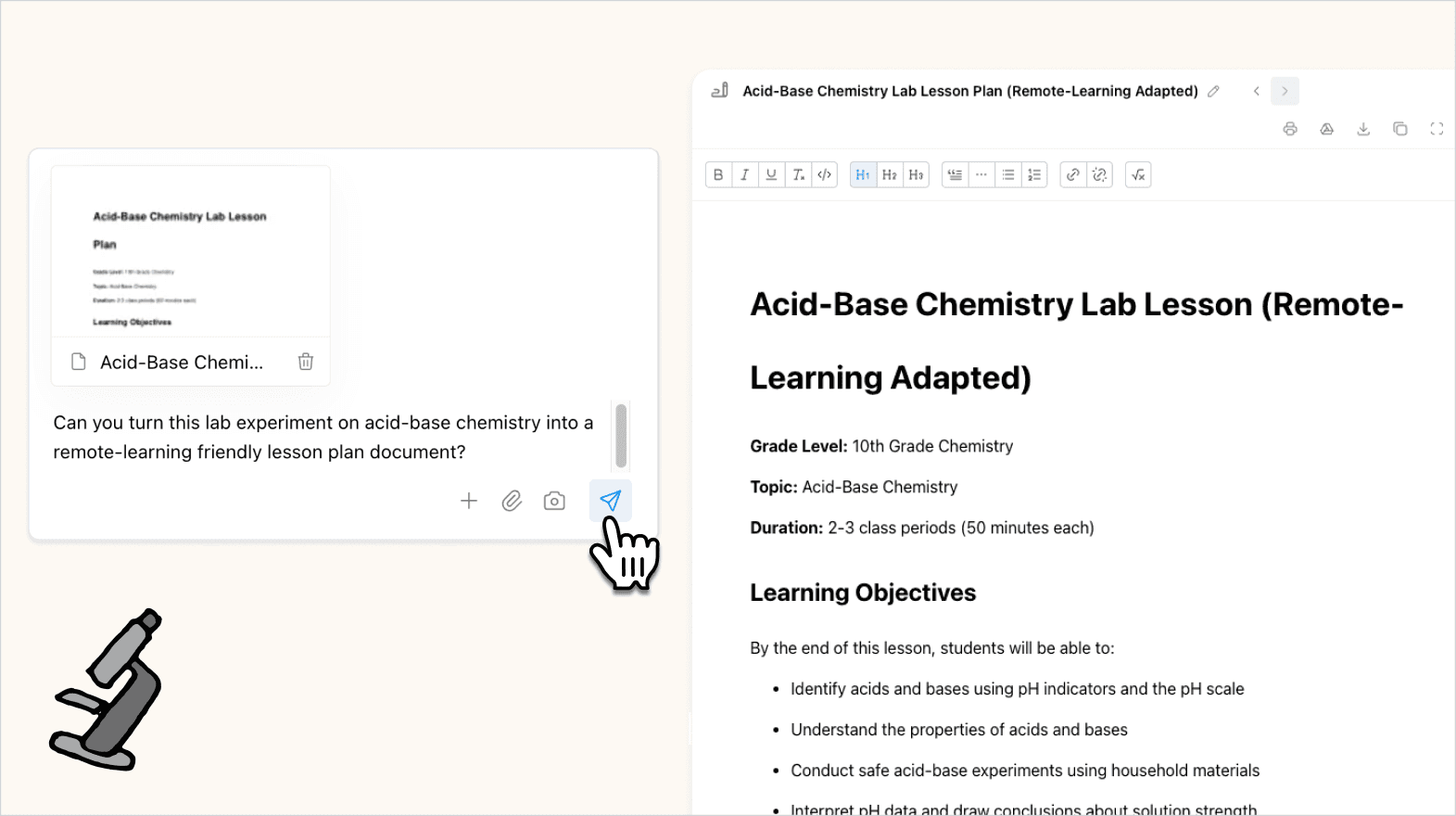
You have likely already built lesson plans, worksheets, and activities designed for face-to-face instruction. Rather than starting from scratch, use Sparky as a thought partner to adapt what you have.
Start a chat with Sparky and upload your existing materials: a lesson plan, a worksheet, an outline of a group activity you had planned.
Then, provide context. For example, you can message Sparky the following: "I need to deliver a similar learning experience, but my students will be learning remotely."
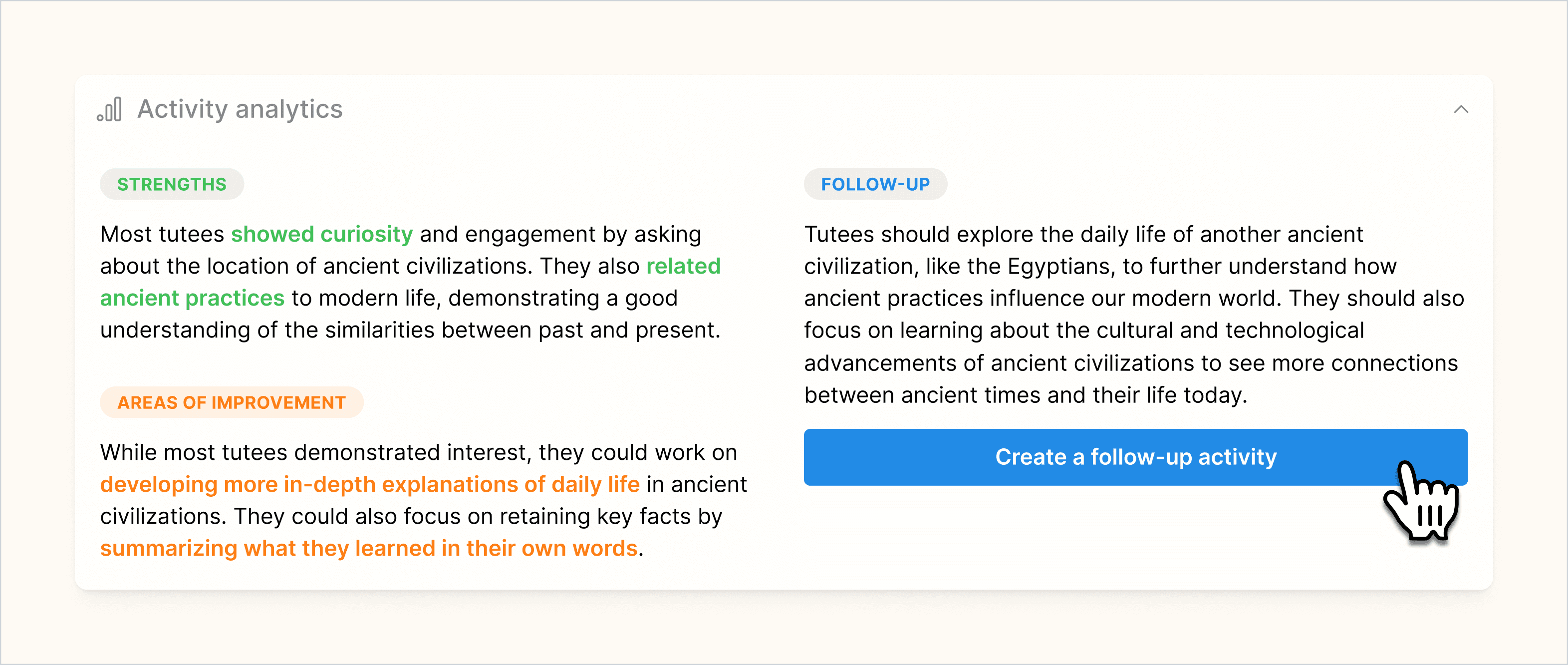
Sparky excels at this kind of collaborative problem-solving. One common adaptation: transitioning an in-person group activity to a Flint Activity where students interact with Sparky one-on-one. You will still be able to analyze sessions and understand student performance. While students will not benefit from live peer discussion, they will still receive a personalized learning experience during this time.
Drive engagement through multiple modalities
The dimensions through which you can express yourself over Zoom are limited. Everything is 2D. Students tune out. Devices become distractions.
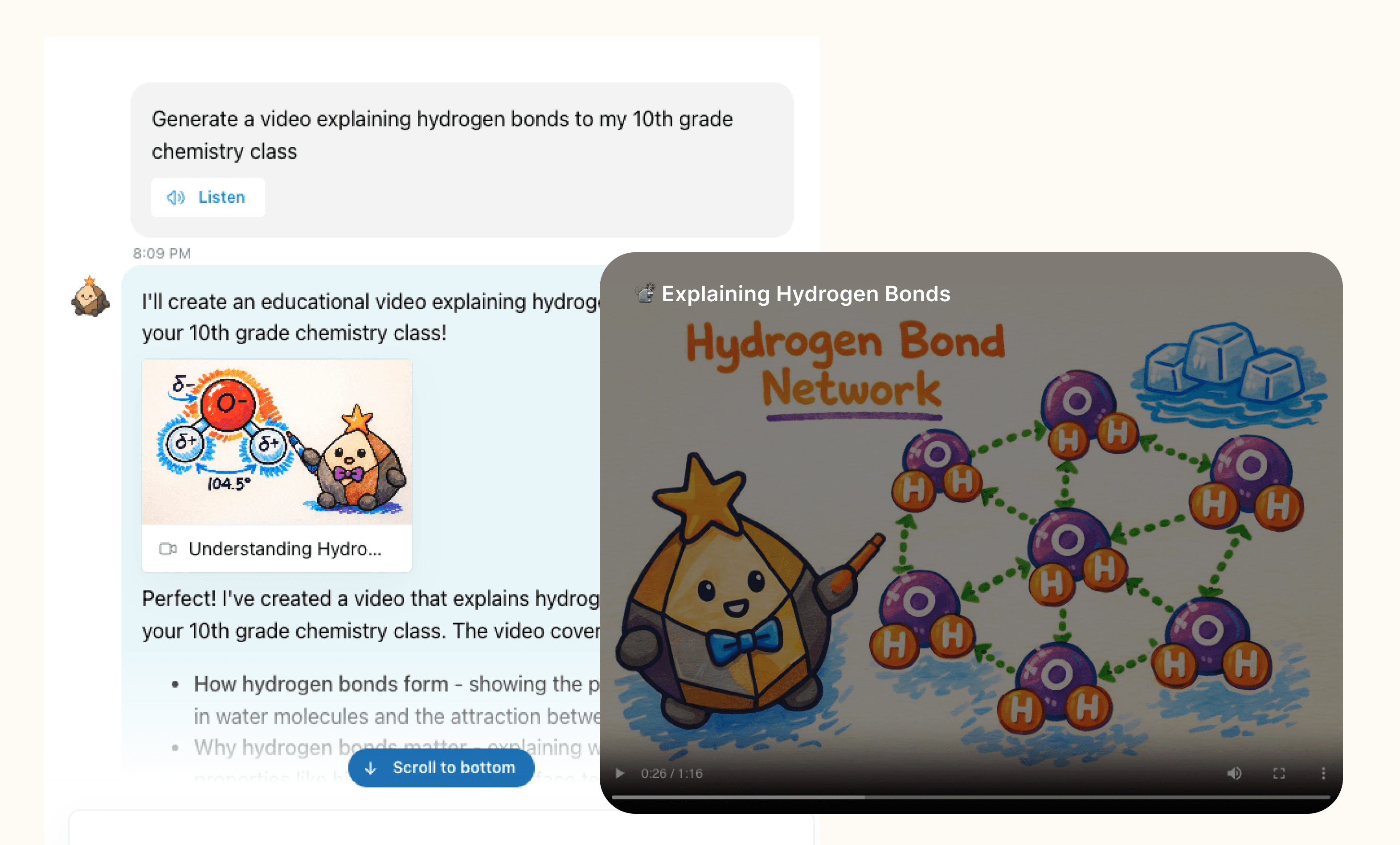
One methodology to cut through: offer students a variety of content formats. Beyond lecturing with slides, use Flint's video generation feature to either set the stage for a live Zoom discussion or deliver part of the class content asynchronously.
Share source material with Sparky (a reading, a textbook chapter) and ask for a video explaining that content. You can personalize these videos for different learners based on their historical strengths and areas for improvement. Then share via Zoom playback or upload to your LMS for students to view and respond to on their own time.
Leverage the Flint community
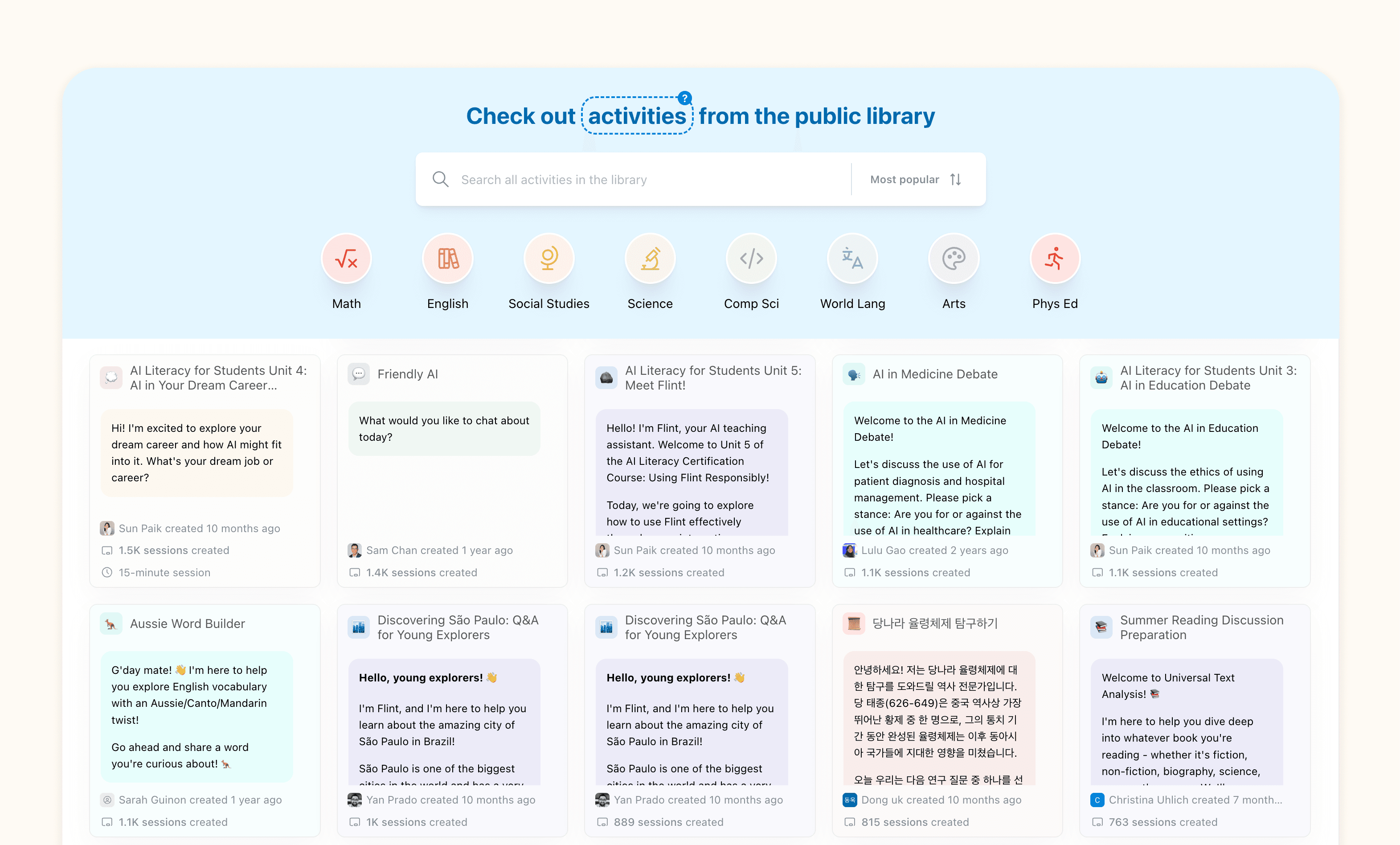
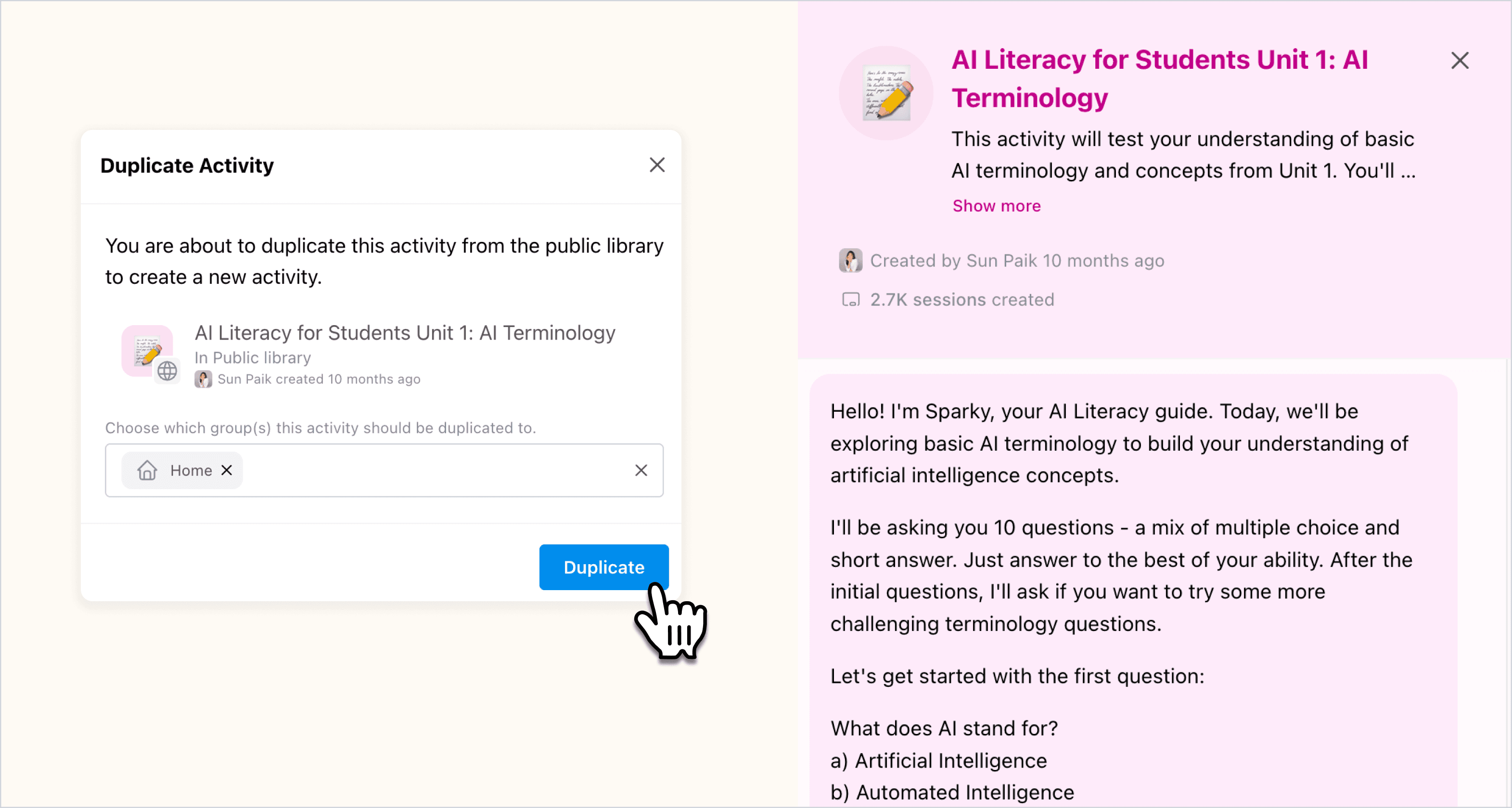
Over the past few years, thousands of teachers have opted to publicly share the activities they have created on Flint. This means you can browse a library of vetted, classroom-tested resources created by educators worldwide.
Search by subject to find a relevant Flint Activity, then:
-
Test the activity yourself
-
Make pedagogical adjustments or upload your own source materials
-
Share with your students
In a pinch, this dramatically reduces the lift required to set up something meaningful for your students while benefiting from the expertise of a community full of remarkable teachers we have had the honor of working with.
No individual tool is the end-all solution for navigating a difficult transition. But we do believe the adaptability of a tool like Flint can serve as an extra pair of hands when your workload suddenly doubles.
If you discover strategies that work during this time, we would encourage you to share them with the Flint community. The best practices for remote learning have always come from educators themselves, and this moment is no different.
We are thinking of all our educators and students in the Middle East during this difficult time.