Sep 28, 2026
The 10 Biggest Parent Concerns About AI in School, and How to Answer Them
Parents' top worries about AI in school, drawn from a dozen 2025 and 2026 surveys, with a plain answer for each that school leaders can share with families as-is.

Jemel Fanfan | Founding Member at Flint

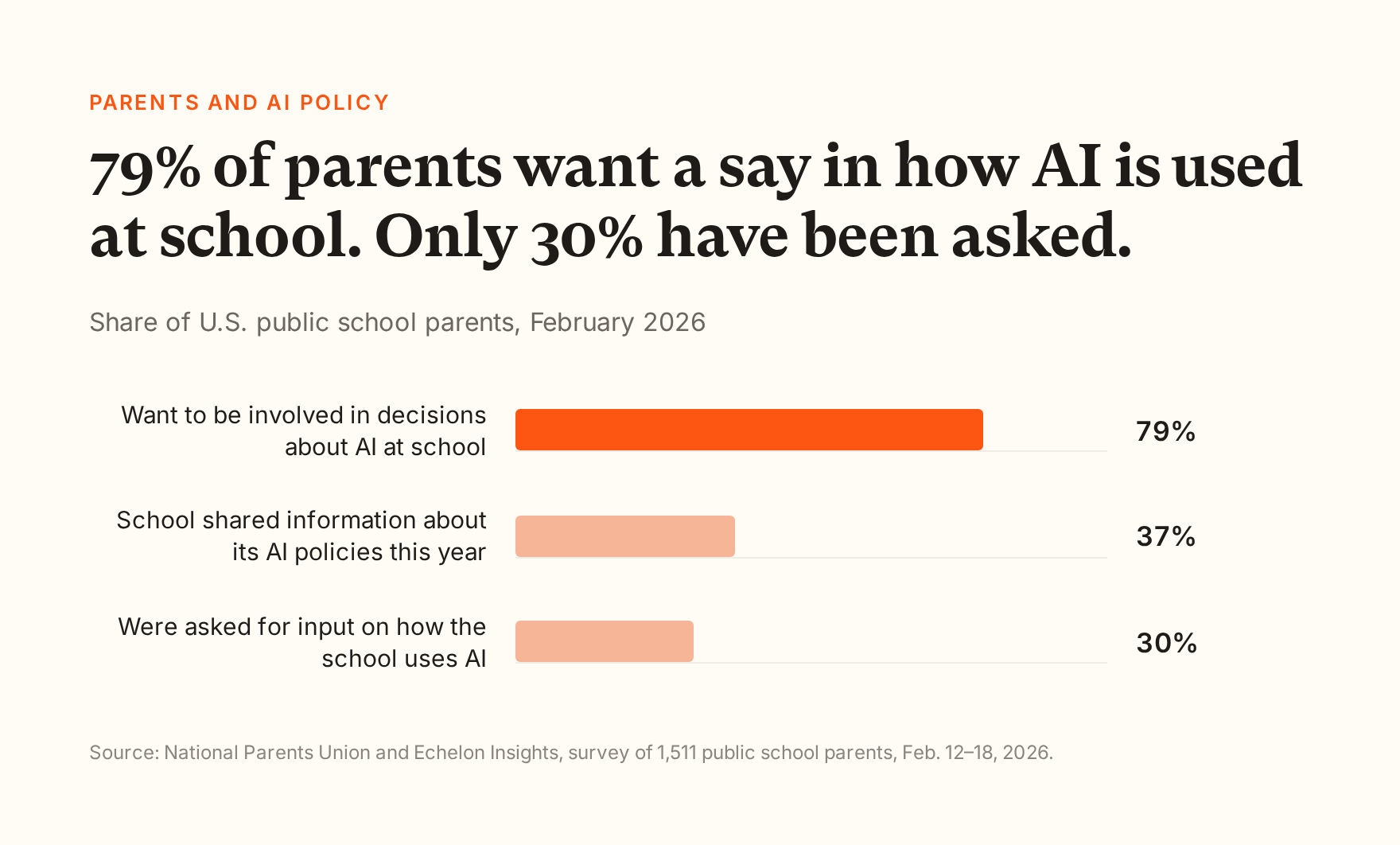
Parents are asking about AI at back-to-school nights, in board meetings and in the car line. Most schools haven't said much yet. In a February 2026 National Parents Union survey of 1,511 public school parents, only 37% said their school had shared information about its AI policies this year. 47% said it hadn't, and 15% weren't sure. Only 30% had been asked for their input.
That silence tends to fill with the loudest story in the news. This September, New York City paused student-facing AI in its elementary and middle schools, and Los Angeles Unified blocked AI tools on district devices. Parents everywhere are now asking their own schools where they stand.
I read about a dozen parent surveys from late 2025 and 2026 and pulled out the concerns that come up most often and most strongly. The ranking below is my synthesis across them, not the result of a single poll. Under each concern is a short answer in plain language. I wrote them so a principal could send them home as-is, and so a parent reading this directly gets a straight answer.
This is the first of three posts for school leaders on AI and families. It doesn't mention any particular product.
Do parents want AI in schools or not?
Both, depending on how you ask. Two large parent polls from July 2026 look like they contradict each other:
- 75% of parents supported "such a policy to pause the introduction of AI into schools" in a poll of 2,000 parents by the Institute for Family Studies and YouGov.
- 76% of parents favored at least some use of AI in schools in a survey of 2,053 parents by the National School Choice Awareness Foundation. 78% said a school's approach to AI matters when choosing a school.
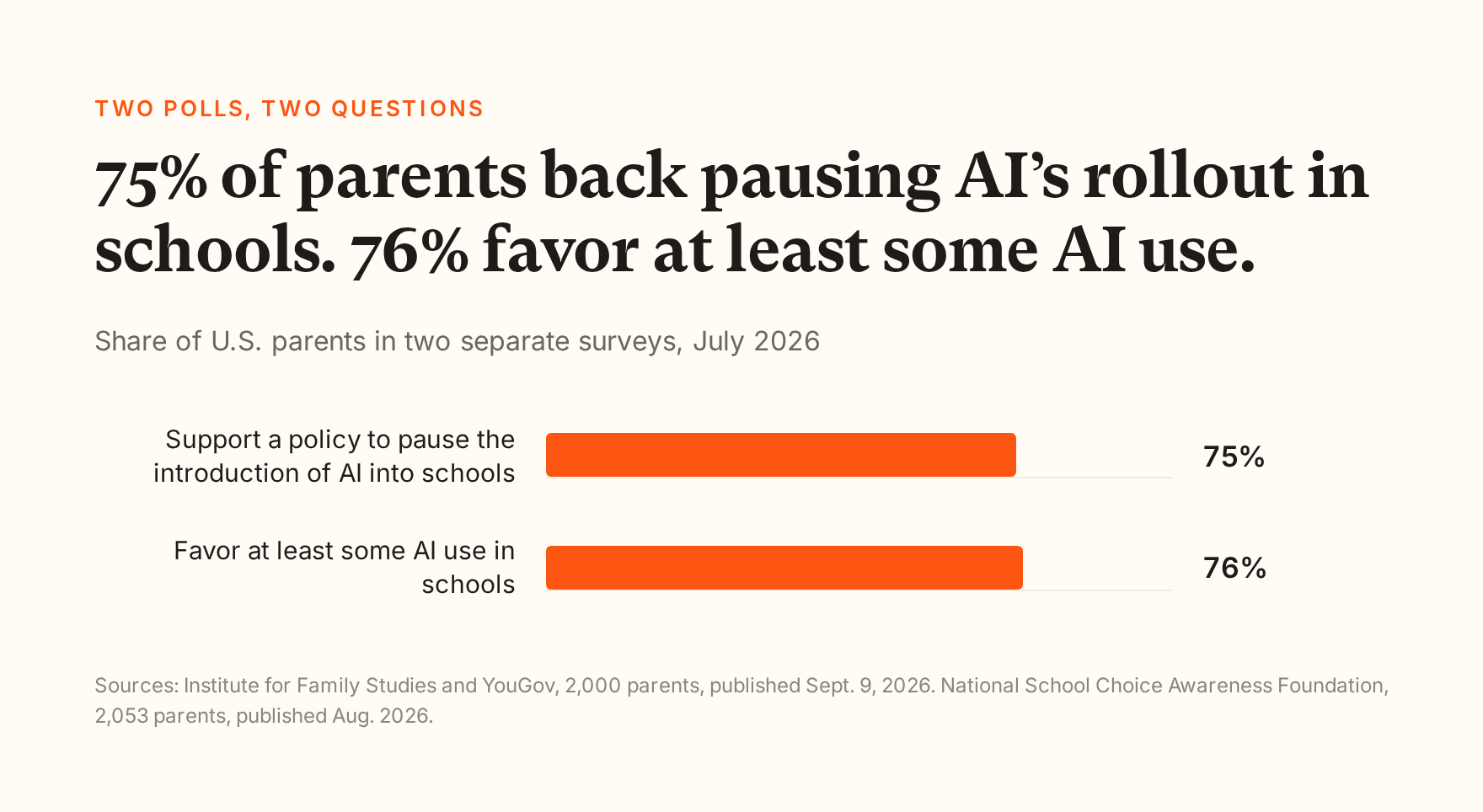
These aren't opposite findings. They're answers to different questions. A parent can want a pause on new tools and still be fine with some AI in class, and 30% of the second survey chose "limited or moderate" use. Both sponsors are advocacy groups, too: the Institute for Family Studies argues for limits on children's technology, and the National School Choice Awareness Foundation promotes school choice.
The more useful signal is what runs through every survey below. Parents who push back hardest are usually reacting to AI they weren't told about and can't see. Most of the answers in this post come down to telling families what you're doing before they have to ask.
1. Will my child use AI to cheat?
Why parents ask: Academic honesty is the top concern for parents of 12- to 18-year-olds. More than 1 in 4 named it their single biggest worry in a Child Trends and NORC survey, ahead of privacy and learning loss.
How to answer: "Every assignment has a rule for AI, and teachers tell students what it is. Some tasks allow AI for feedback or practice. Others, like essays and tests, don't. We don't treat an AI detector score as proof. If a teacher has a concern, they talk with your child and look at their drafts and notes."
Our post on whether it's cheating if a child uses AI covers this one in depth, written for parents.
2. Will AI do my child's thinking for them?
Why parents ask: Half of parents (49%) worry their child relies on AI too much, in a Deloitte survey of 1,207 parents taken in May 2026. In the National School Choice Awareness Foundation survey, "too dependent on technology" was the strongest argument against AI in school, chosen by 48%.
How to answer: "We only use AI where it helps students think, not where it thinks for them. The tools we approve are set up to ask questions and give hints rather than hand over answers, and plenty of work still happens with pen, paper and discussion. If you ever see AI doing your child's work for them, please tell us."
3. Could my child see something inappropriate?
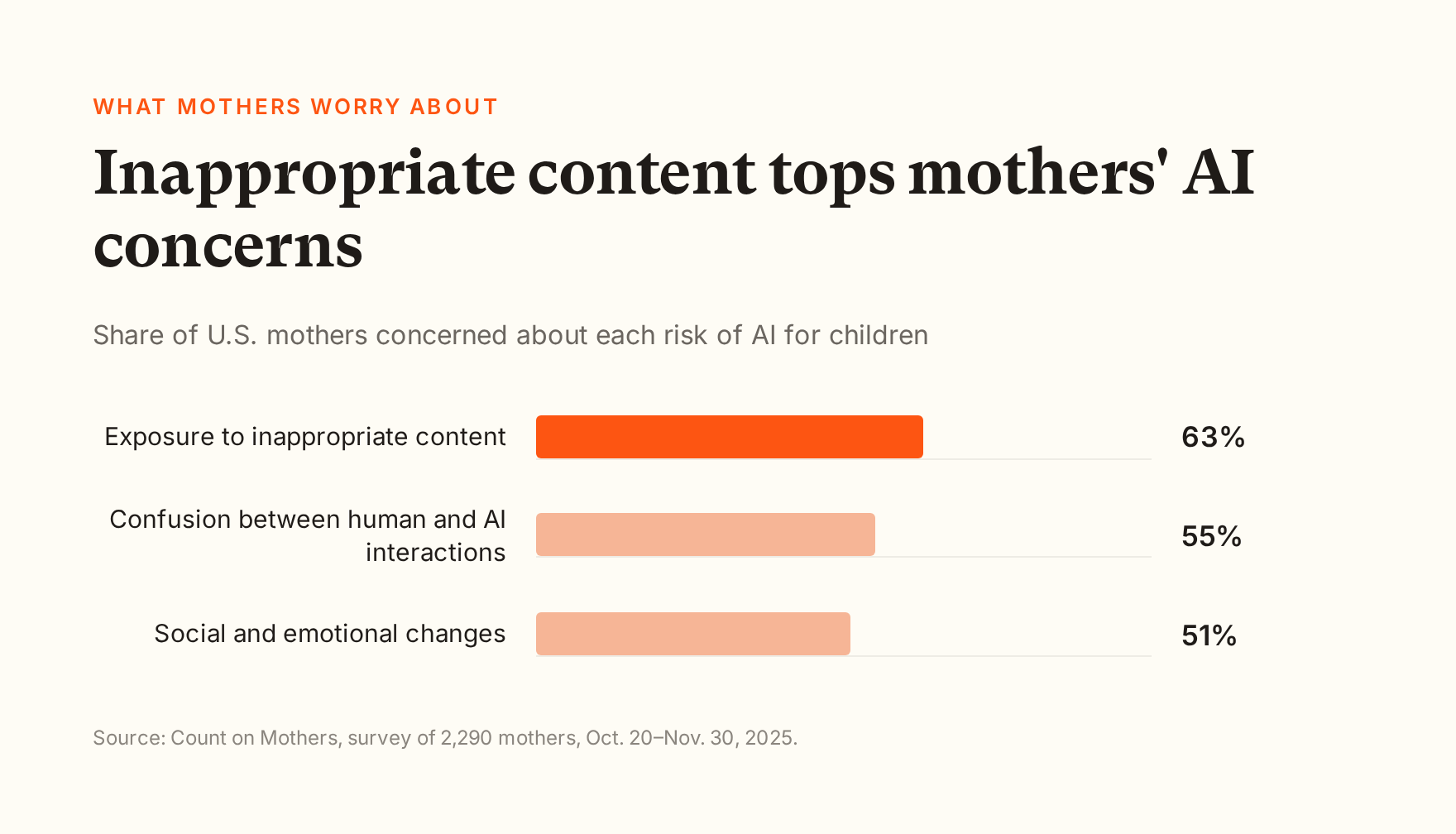
Why parents ask: It's the top worry for mothers. 63% named inappropriate content as a concern in a Count on Mothers survey of 2,290 mothers, ahead of confusion between talking to a person and talking to an AI (55%).
How to answer: "The AI tools we approve for students have content filters built for school, and they're different from the free chatbots available online. If a student raises something concerning, like self-harm, the tool alerts school staff so a person can follow up. Here's who gets those alerts and what they do next: [fill in]."
If your school can't finish that last sentence, it's the first thing to sort out with your vendor.
4. What happens to my child's data?
Why parents ask: More than 70% of Massachusetts parents worry about threats to student data privacy, biased evaluations and unequal access, according to MassINC Polling Group and EdTrust Massachusetts. Nationally, 65% of parents told the National Parents Union that more needs to be done to protect students' personal data.
How to answer: "Here's the list of AI tools your child may use. Each one has a signed agreement with us that limits how student data can be used. [Say whether each tool uses student data to train AI models, in those words.] Student data isn't sold. If you want to see what's stored about your child or ask for it to be deleted, contact [name]."
Parents ask about AI training more than any other data question. Don't answer it with "we take privacy seriously." Either the vendor trains on student data or it doesn't, and your contract should say which.
5. Why wasn't I told?
Why parents ask: Because most weren't. Only 37% of parents said their school had shared any information about AI policies, and 47% said it hadn't. Many parents also underestimate how much their child already uses AI. In Pew Research Center's survey of teens and their parents, 64% of teens said they use AI chatbots, while only 51% of parents thought their teen did.
How to answer: "Here's one page with every AI tool your child may use, what it's for, which grades use it, and our rules. We'll update it when anything changes, and we'll tell you before a new tool reaches students."
Then keep that page current. A list that's six months out of date does more damage than no list.
6. Do I get a say?
Why parents ask: 79% of parents want to be involved in decisions about AI at school, and only 30% have been asked, according to the National Parents Union. Some states now require consent. Florida's State Board of Education approved rules in September requiring schools to notify parents and get their permission before students use AI tools.
How to answer: "Here's how to share your view: [survey, meeting date, committee]. If you'd rather your child not use a particular AI tool, here's what we offer instead: [alternative]."
Decide the alternative before you publish the policy. An opt-out without a real alternative assignment is where many policies get stuck.
7. Will my child get attached to a chatbot?
Why parents ask: 72% of U.S. teens have used an AI companion at least once, and 52% are regular users, according to Common Sense Media. Lawsuits over teens and companion chatbots have made national news, and New York City's pause also covers companion chatbots.
How to answer: "The AI tools we use are for schoolwork. They aren't designed to be your child's friend, and teachers can see how students use them. Companion apps like Character.AI are a different kind of product, and we don't allow them on school devices. If you're worried about apps your child uses at home, we're happy to talk."
Only say the last part about school devices if your filters actually block those apps.
8. Is this more screen time?
Why parents ask: 75% of public school parents want schools to set daily screen time limits, in a National Parents Union survey from June 2026. The same survey found 74% think the amount of device use at school is about right. Parents want balance, not zero.
How to answer: "AI is one tool among many. Here's roughly how much class time it takes in a typical week at your child's grade: [estimate]. Reading, writing by hand and discussion aren't going anywhere."
9. Is the teacher still doing the teaching?
Why parents ask: Only about a third of Massachusetts parents are "very comfortable" with teachers using AI, according to MassINC. Parents in Dorchester School District Two in South Carolina questioned AI-assisted grading in September. The district's answer is a useful model: AI "cannot be the sole basis for a grade," and teachers review everything.
How to answer: "Teachers may use AI to plan lessons or draft materials, and they review everything before it reaches your child. AI never decides a grade on its own. When a teacher writes to you, it's the teacher writing."
Parents also need to hear that teachers are trained. Only 18% of teachers had received any formal guidance on AI in a Gallup survey of 2,069 teachers this spring. If your staff has been trained, say so, and say how. For the classroom side, our post on whether teachers should use AI to grade covers where teachers can draw the line.
10. Is it fair to every child?
Why parents ask: The same Massachusetts parents who worry about privacy also worry about biased evaluations of student work and unequal access to AI, at rates above 70%. Parents have also seen stories of students wrongly accused of using AI by detection software.
How to answer: "Every student gets the same access to the AI tools we approve at school, so no one needs a paid account at home to keep up. AI doesn't grade your child on its own, and no student is accused of misconduct based on a detector score alone."
Answers you can paste into a family newsletter
Here are the answers above in one block. Replace the bracketed parts with your school's details, and cut any line you can't stand behind yet.
Newsletter template
How [School] uses AI
Which tools? Your child may use [tools] in [grades/subjects]. The full list, with what each one is for, is at [link]. We'll tell you before any new tool reaches students.
Cheating. Every assignment has a clear rule for AI use. We don't treat AI detector scores as proof. Teachers talk with students and look at their work.
Thinking. The tools we approve ask questions and give hints instead of handing over answers. Plenty of work still happens without screens.
Safety. Student AI tools have school content filters. If a student raises something concerning, school staff are alerted and follow up.
Data. Every tool has a signed data privacy agreement with us. [Tool] [does/does not] use student data to train AI models. Student data isn't sold. To see or delete your child's data, contact [name].
Teachers. Teachers review anything AI helps produce, and AI never decides a grade. Our staff completed [training] in [month].
Your say. Share your views at [link/date]. If you'd prefer your child not use a tool, we offer [alternative].
Questions? Contact [name, email].
What school leaders can take from this
None of these ten concerns is unreasonable, and most can be answered in a sentence or two. The schools that end up in the news usually had answers. They just gave them after parents found out some other way.
Parents don't expect you to have AI figured out. CoSN's 2026 survey of district technology leaders found 79% of districts now have AI guidelines, up from 57% a year earlier. Families will expect to see yours.
Next in this series: what parents want from the AI platform their school chooses.